Search "Jenks home prices" this week and you will get answers that do not just differ, they contradict each other. One source puts the median sale price near $360,000, climbing about 4 percent over the past year, with homes going pending in roughly ten days. Another puts the median at $375,000, down 8 percent, with homes sitting for 79 days before they sell. Same city. Same month. Opposite stories.
Neither number is wrong. That is the part worth sitting with before you use either one to compare Jenks against Bixby, Broken Arrow, or a south Tulsa listing you just saw. The confusion is not a data error. It is what happens when a single median tries to describe three different housing markets that all happen to share a mailing address.
The Same Search, Three Different Numbers
Start with what is actually verifiable. Brokerage IDX feeds pulling live Jenks listings this year put the average asking price across roughly 230 active listings at just under $527,000. It is higher than either median above.
Part of the gap is simple math: Jenks homes run bigger than the county norm. The average home here comes in around 2,843 square feet, against a county average of 2,327 square feet. A market with larger homes will always carry a higher average price tag than a market with smaller ones, regardless of what is happening to values.
But size alone does not explain a $150,000 to $170,000 spread between what is listed and what actually closes. That gap points to something else: Jenks is not one price tier stretched thin. It is three separate tiers, each with its own pace, its own buyer, and its own reason for existing.
A single median cannot describe a place that is actually three markets wearing one zip code.
Tier One: The Legacy Streets Doing Most of the Closing
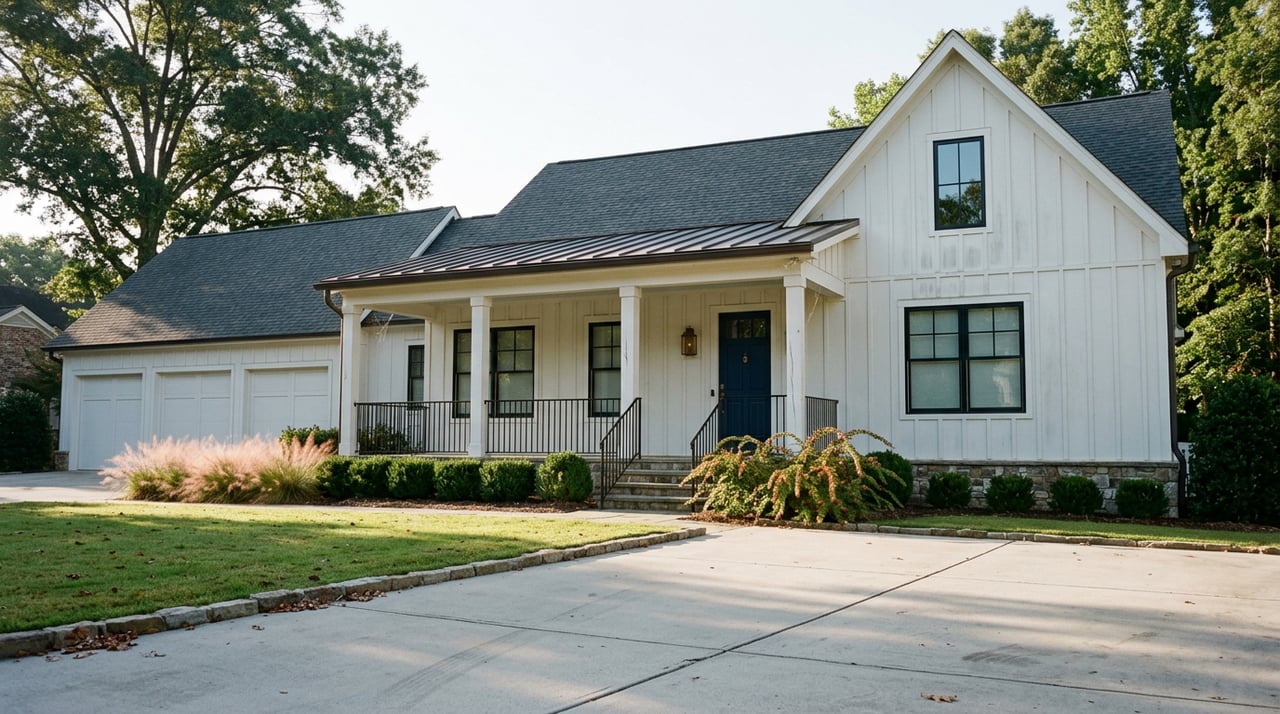
Most of what actually sells in Jenks in any given month is not new construction. It is the existing housing stock on non-gated streets across town, the homes that trade at a pace closer to what the lower median figures describe. This tier is where days-on-market numbers matter most, because condition and pricing discipline decide whether a listing moves in ten days or seventy.
If you are comparing this tier to a similar street in Bixby or Broken Arrow, the closed-sale median is your honest anchor. The average asking price across all of Jenks tells you almost nothing about what a 1990s or early-2000s home on an established street will actually fetch.
Tier Two: The Gated Corridor Pulling the Average Up
Drive west on 106th Street past Elwood and the product changes. This corridor has become the address for new-build gated luxury in Jenks, anchored by communities like Stone Bluff at Holly, built by True North Homes. Larger lots, higher-end finish packages, and HOA-maintained amenities sit here at price points that have nothing to do with the legacy resale tier a few miles away.
This is the corridor doing most of the work to pull the citywide average listing price toward $527,000. It is a real and desirable product. It is just not the product most closed sales in Jenks actually represent, which is exactly why an average built across both tiers misleads anyone using it to size up affordability.
Tier Three: The River Corridor About to Get Louder
The third tier is the one changing fastest, and it sits right at the edge of Jenks rather than inside its older neighborhoods. Downtown, The Ten District has spent the past several years converting a stretch once known as Oklahoma's antique capital into a walkable retail and dining core, adding tenants like the boutique Lenny Lane and a McNellie's Group restaurant to what had been a district of booth-rental antique malls. A few blocks over, Village on Main has built out more than 420,000 square feet of shopping, dining, and entertainment space along Jenks's Main Street corridor.
Now a much larger project is set to reshape the river corridor immediately adjacent to that downtown core. Riverline is a $400 million, 37-acre mixed-use development led by Rainier Development Co. in partnership with the Muscogee Nation, planned directly across Riverside Parkway from River Spirit Casino at the Tulsa-Jenks line. The Tulsa World reported that Phase One alone calls for 282 multifamily units and about 120,000 square feet of curated retail and dining, with the developer envisioning an experience comparable to Utica Square rather than a typical shopping center. The full build-out adds up to roughly 780 housing units and 213,800 square feet of retail, running through 2032.
The groundbreaking target the developer has repeated since planning began is summer 2026. That is now. Whether the first shovels are already in the ground or breaking within weeks, the construction window this article is being written in is the same window Riverline's own timeline points to.
Riverline itself sits in south Tulsa, not inside Jenks city limits. But it is close enough, and large enough, that it changes the calculus for anyone evaluating property near Jenks's river-facing corridor. Phased construction next door means years of nearby building activity before the retail and residential mix fully lands. It also means a meaningful jump in nearby retail and rental supply once phases deliver, which will eventually put new competitive pressure on rents and foot traffic in the Ten District and along Main Street.
Three Corridors, Three Different Products
| Corridor | What's there | What actually drives price |
|---|---|---|
| Legacy resale streets | Established, non-gated homes across Jenks | Condition, days on market, closed comps |
| 106th Street / Elwood gated corridor | New-build luxury, including Stone Bluff at Holly by True North Homes | Lot size, finish level, HOA amenities |
| River corridor (Ten District, Main Street, Riverline) | Downtown retail plus a $400 million project with a planned build-out through 2032 | Walkability now, new supply and construction disruption over the next several years |
What This Means If You're Comparing Jenks to Bixby or Broken Arrow
A headline price only helps you if you know which of these three products it describes. Before you weigh a Jenks listing against something in Bixby or Broken Arrow, it is worth running through a short checklist:
- Ask which corridor the listing sits in before comparing its price to any citywide figure. A home on 106th Street west of Elwood and a home three miles east are not competing in the same tier, even though both show up under "Jenks" in a portal search.
- Pull closed comps from that specific corridor, not the city median. The legacy resale tier and the gated new-build tier will show very different price-per-square-foot numbers even in the same month.
- If you are looking at anything near the river corridor or downtown Main Street, ask directly about Riverline's construction phase and timeline. A property that reads as walkable and finished today may sit adjacent to active construction for several years before the full project delivers.
- Compare price per square foot rather than gross list price. Given the size gap between Jenks's average home and the surrounding county, a raw dollar comparison will overstate how much more expensive Jenks actually is for a home of the same size.
None of this means Jenks is harder to buy into than it looks. It means the number that gets repeated as "the Jenks price" is really an average of three answers to three different questions, and knowing which question you are actually asking is most of the work.
FAQ
Why do different real estate sites show different median prices for Jenks?
Portals pull from different data windows and different mixes of closed sales, and Jenks's inventory spans everything from older non-gated homes to new-build gated luxury on the 106th Street corridor. A median calculated across that full mix will move depending on which properties happened to close in the window each site is measuring.
Is Riverline actually part of Jenks?
No. Riverline is planned in south Tulsa, across Riverside Parkway from River Spirit Casino, at the Tulsa-Jenks line rather than inside Jenks city limits. Its scale and proximity to Jenks's river corridor and downtown district make it relevant to anyone evaluating that part of Jenks, even though the address itself is technically Tulsa.
Will Riverline change home values in Jenks?
It is too early to say with any precision, since the groundbreaking is targeted for summer 2026 and it is not yet clear whether construction has started; the full build-out runs through 2032. What is clear from the developer's own figures is that a large volume of new retail and rental supply is coming to the immediate area, which is exactly the kind of local development that tends to reshape demand for nearby corridors over time.
If you are trying to figure out which Jenks corridor actually fits your budget and timeline, or how a specific address compares to something you are considering in Bixby or Broken Arrow, that is a conversation worth having before you trust a single portal number. The Bradshaw Group works these Tulsa-metro corridors every week and can walk you through what a specific street is actually doing right now. Start with a free home valuation and get numbers built around your address instead of a citywide average.