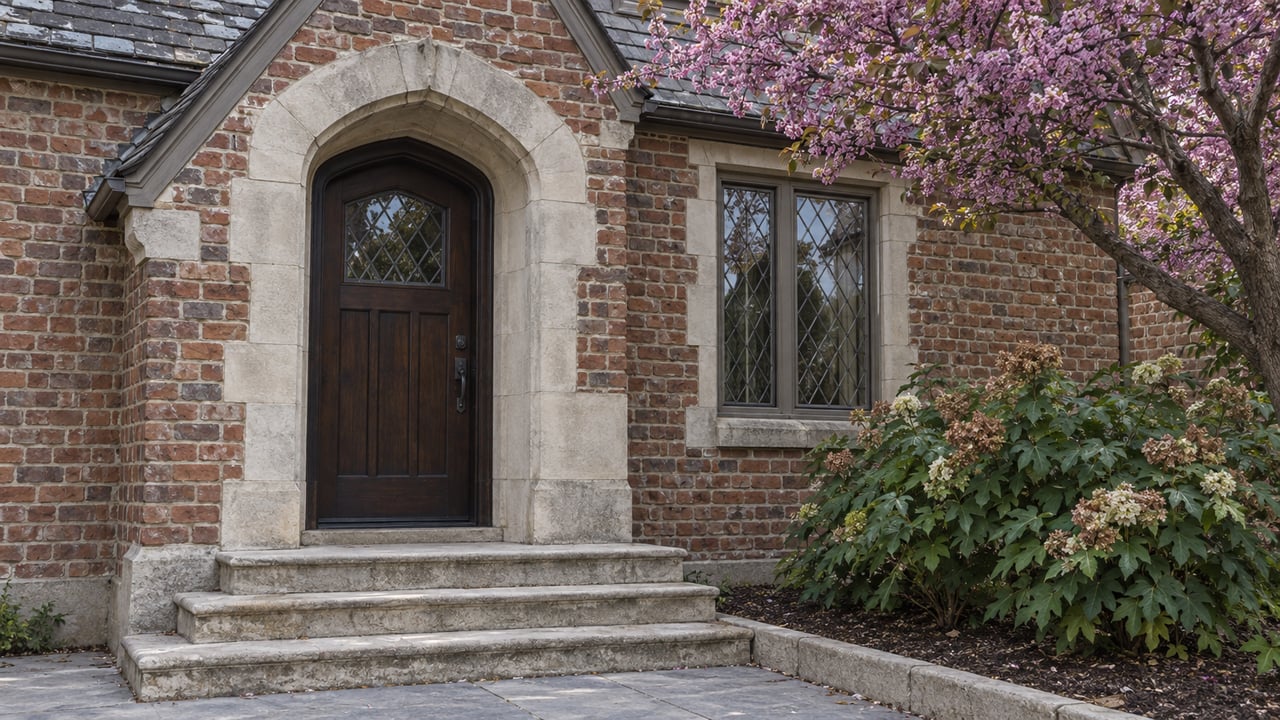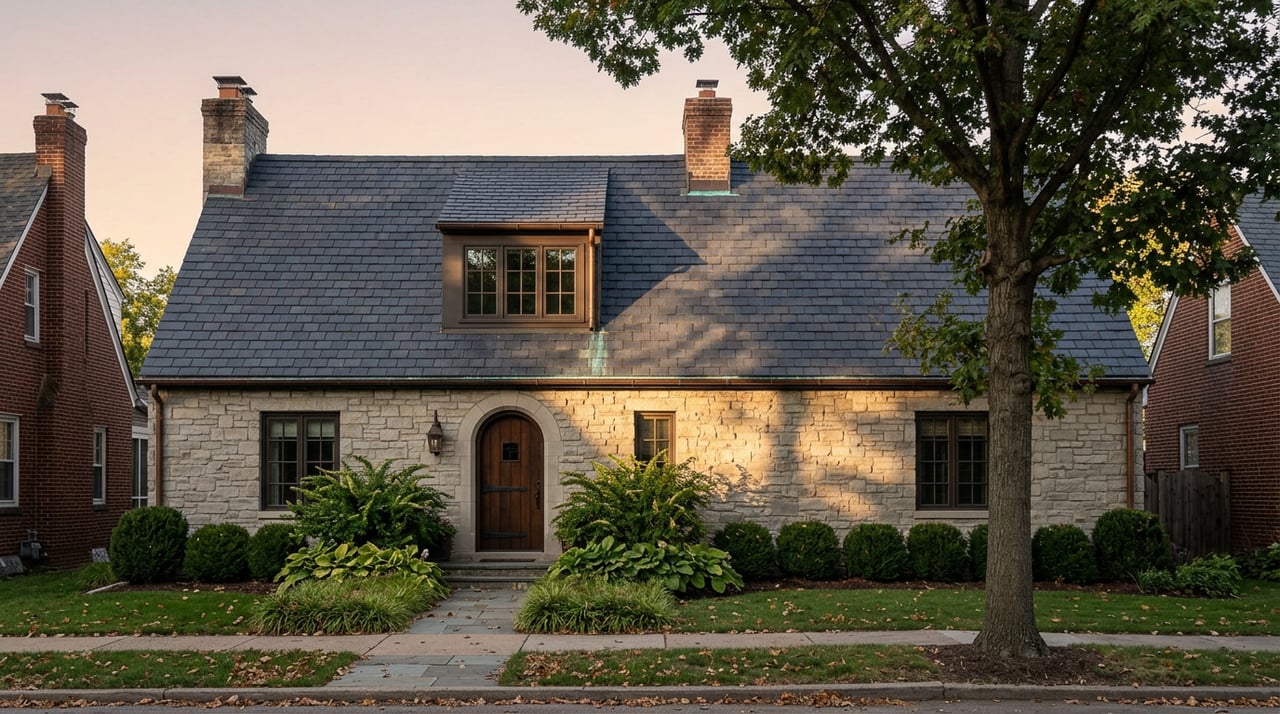
Say you close on a 1928 Tudor in Swan Lake in October. The inspection came back clean, the bones are good, and the only item on your list is a roof that's showing its age. You call a roofer in November, expecting a two-week turnaround before winter. Instead you learn the roof can't be touched until a city commission signs off on the shingle type and the replacement material, a review your roofer says he cannot start without.
That is the part of buying in Tulsa's historic districts that buyers should put on their checklist. The house itself is not the friction. The permit sequence is.
The Second Approval to Plan For
Most Tulsa homebuyers deal with one layer of city oversight: the standard building permit process through Development Services. Homes in a Historic Preservation Overlay deal with two. The Tulsa Planning Office is direct about the order of operations: once a neighborhood has an HP Overlay in place, nearly all exterior projects require review and approval from the Tulsa Preservation Commission, and that review happens before the standard building permit is even issued.
This is not a formality that a contractor waves through. Story Remodeling, a firm that works across the metro, puts it plainly for homeowners in Maple Ridge, Owen Park, and Brady Arts: visible exterior changes may need Historic Preservation review before you apply for the building permit at all. Interior work is generally outside the Commission's reach. Repaint the kitchen, refinish the floors, redo the plumbing behind a wall, and the HP layer never enters the conversation. The moment work is visible from the street, the sequence flips, and the city permit waits on the Commission's answer.
Which Streets This Actually Touches
The HP Overlay is not a Midtown-wide blanket. It applies to specific, named residential districts.
That distinction matters more than it sounds. The Tulsa Planning Office describes National Register status as largely honorary unless federal money touches the project. HP zoning is the one with teeth, because it's a local zoning overlay enforced through the city's own code, not a federal designation with limited local reach. Confirming which one (or both) applies to a specific address, through the Tulsa Planning Office's HP district maps, is a five-minute check that changes what a buyer should expect after closing.
The Roof Is Where It Gets Real
Roofing is the clearest example because it collides with two sets of rules at once: the Commission's preference for matching the home's original material, and Oklahoma's own 2026 building code updates.
The Commission's standard, as laid out in the residential design guidelines, is to retain the original roof form and pitch and to preserve character-defining features like dormers, eave brackets, and exposed rafter tails. A-Best Roofing describes the stated preference for material replacement as "in-kind," meaning a 1920s Tudor that originally had wood shakes or clay tile is expected to be replaced with the same. That preference has loosened slightly in 2026. A roofing contractor that has worked in these districts for decades notes that synthetic slate and shake products are now popular specifically in Maple Ridge, because they replicate the look of heavy slate without the weight or the cost of the real material, giving homeowners a Commission-friendly option that doesn't require sourcing actual slate.
Layered on top of that local preference is a statewide shift in the 2026 residential code that applies whether a home sits in an HP district or a brand-new subdivision: metal drip edges are now required on all eaves and rakes, ice-and-water shield is required in valleys and around roof penetrations, and double-layering shingles over an old roof is now discouraged strongly enough to void some warranties and complicate insurance claims. None of that is a historic-district rule. It's a citywide and statewide requirement that a homeowner in Swan Lake has to satisfy on top of getting the material and form approved by the Commission.
The two systems aren't in conflict, but they aren't sequenced by the same clock. A code inspection can happen on a contractor's schedule. A Certificate of Appropriateness moves on the Commission's calendar.
What Actually Needs Approval and What Doesn't
The line between a project that clears in an afternoon and one that needs a Commission hearing comes down almost entirely to visibility from the street.
| Project type | Standard Tulsa permit | HP Overlay review |
|---|---|---|
| Same-type flooring replacement, interior paint | The City of Tulsa says usually none | Not applicable |
| Kitchen refacing with no plumbing or electrical moves | Usually none | Not applicable |
| Roof replacement (material or form change) | Building permit required | Certificate of Appropriateness required |
| Window replacement or new window openings | Certificate of Appropriateness required | |
| Exterior additions that change square footage | Building permit required | Certificate of Appropriateness required, and additions face the most scrutiny |
| Structural work behind walls (subfloor, load-bearing) | Building permit required | Not applicable unless visible from exterior |
The house doesn't slow you down. The paperwork sequence does, so plan for it before you're the owner.
What This Means If You're Under Contract Right Now
If an offer is already in on a home inside one of the districts listed above, three things are worth doing before closing rather than after.
First, ask the seller directly whether any exterior work, especially roofing, siding, or window replacement, is planned or overdue. A roof nearing the end of its life is a different conversation in Swan Lake than it is in a subdivision, because the timeline to replace it involves the Commission's meeting schedule, not just a contractor's availability.
Second, confirm the property's HP status on the city's own district map rather than assuming based on the neighborhood name. Boundaries for these districts don't always match the way real estate marketing draws them, and a home a block outside the line answers to different rules than one inside it.
Third, when you do hire a contractor, ask whether they've pulled a Certificate of Appropriateness before, not just a standard city permit. A contractor experienced in Maple Ridge or Yorktown will already know what documentation the Commission wants for a material change, which saves a resubmission cycle that can add weeks.
None of this should scare a buyer off a historic Tulsa home. Third-party trackers pegged Midtown listings anywhere from around $280,000 for a modest bungalow to well over $500,000 for a fully renovated historic property on a larger lot as of early 2026, and that range reflects genuine demand for these streets, not a discount for the extra process. It does mean the timeline for the first major exterior project looks different than it would in a newer part of Tulsa, and that's worth knowing before you're the one holding the keys.
FAQ
Does every old house in Midtown fall under HP review? No. Only the named districts carry the local HP Overlay. A home can be old, even individually listed on the National Register, without sitting inside one of the zoned HP districts, which means it answers to different rules for exterior changes.
Do interior renovations need Commission approval? Generally no. The Commission's jurisdiction is exterior alterations visible from the street. A kitchen remodel that doesn't touch the home's exterior typically stays inside the standard city permit process.
How old does a house need to be for any of this to apply? For National Register consideration, a property usually needs to be at least 50 years old. Local HP zoning follows similar age and significance standards, though the zoning itself is a separate local decision from federal listing.
If you're weighing a historic Tulsa property against something newer in Jenks, Bixby, or Broken Arrow, the Tulsa neighborhood guide is a good place to compare what different parts of the metro actually ask of an owner. And if you already own a home in one of these districts and are wondering what it's worth given the extra layer of process, Jake Bradshaw and the team at The Bradshaw Group can walk through it with you, permit history and all.
This article is general information, not legal, tax or financial advice. Consult a qualified professional about your situation.